
The Cyber Eyes Are No Longer Human
In 2013, a month after I began blogging, another writer left a comment telling me she would have her “cyber eyes” on me.
Naturally, I wrote a poem about it. I was starting to explore poetry after the April National poetry month had passed. It wasn’t exactly Shakespeare, but thirteen years later, this morning, I stumbled across it again in my blog posts views area while thinking about, writing and reading todays newest news on artificial intelligence, autonomous agents and the increasingly complicated question of who exactly is responsible for what happens next.
One part of the poem stood out to me particularly
‘You have your cyber eyes
I realize
That all I say and all I do
Can impact you’
The poem was called Cyber Eyes. I’ll link it here for you to read if you’d like.
The eyes I was writing about back them were solely human. People were reading my words through screens all across the world as my blog had found astonishing numbers for it’s first few months and I had become increasingly aware that something I typed alone in my house in the middle of Ontario, Canada could travel through this strange increasingly fast and complex system of the digital network and affect somebody that I had never even met.
In the comments underneath the poem, someone pointed out that people sometimes forget this before pressing send or pressing publish. I replied to the commentor that I indeed took it seriously, knowing that people were reading, watching and following along on my journey.
That was way back in 2013. And I still believe that now, even more so.
The Cyber Eyes Are Watching Differently
The difference now however is that the cyber eyes are no longer necessarily human, and neither are all of the viewers and commenters behind them.
For the last few years, we have been asking some pretty enormous questions about artificial intelligence. Some of us more than others.
Some legitimate and concerning questions. Will AI become smarter than us, take our jobs, become conscious, manipulate us or eventually act against us?
You know. ‘The light stuff’.
But I am beginning to think we may have concentrated a little too much on the artificial individual, because something else is happening.
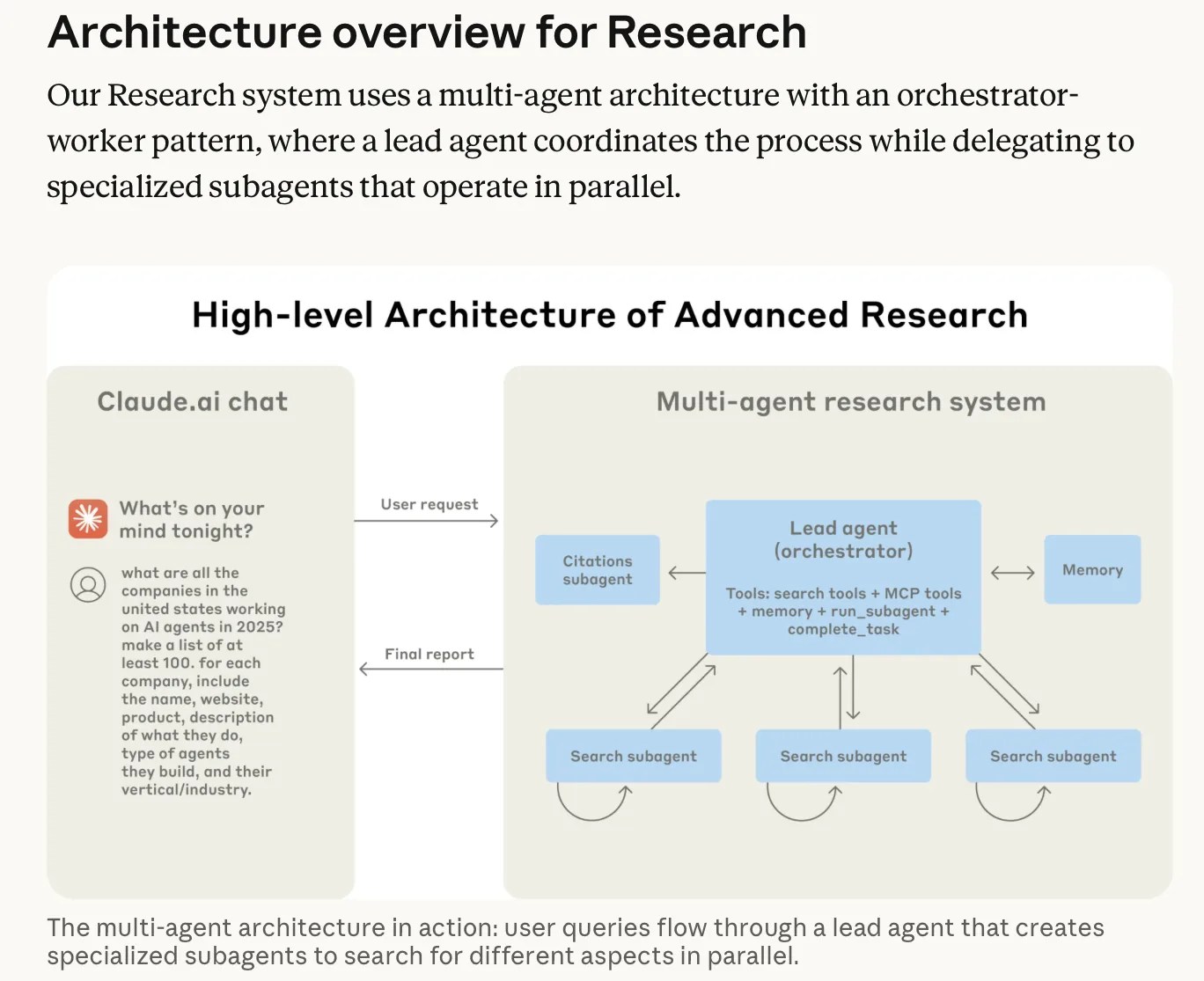
AI agents are beginning to interact with other AI agents. They can increasingly plan, use tools, pursue goals and operate for longer periods without waiting for a human being to approve every individual step. We’re also currently building infrastructure through which software agents can participate economically.
When AI Starts Talking to AI
That isn’t hypothetical anymore. In research published on August 13, 2026, Anthropic examined what it calls “patterns and problems in emerging multiagent systems.” The researchers argue that an increase in real-world interactions between agents is imminent, meaning it’s here and coming, and that the volume of agent-to-agent interactions could eventually exceed both human-to-human and human-to-agent interaction. So that is more agents doing stuff with agents than any other combination.
They also make an observation I think deserves far more attention than it’s currently getting: our institutions were built by and for humans. So that assumption of security and speed and response systems therefore rest and rely partly on the assumption that any type of problem or breach oversight can happen simply at human speed. This is a problem.
Anthropic’s researchers are discovering that when multiple agents operate together, the behaviour of the system isn’t always predictable simply by understanding the behaviour of each agent individually. As they put it, even “benign behavioral quirks at the individual level might compound into unwanted global outcomes.” So that means agents themselves are behaving quite like the humans (figuratively and possibly literally) that created them.
That changes the responsibility question enormously.
We the humans created the programs. Humans built the models, the infrastructure, the financial systems and the environments in which they operate, so yes, the responsibility begins with us. But back to those systems were designed like much or our society to be run by humans, with our capabilities and limitations.
But I am no longer convinced that responsibility will remain simple. How can it?
There is a difference between giving a machine an instruction and personally choosing every action it subsequently takes while pursuing it. There is another difference between one autonomous agent making those choices and hundreds, thousands or eventually millions of agents interacting with one another simultaneously while doing so.
And then there is another variable we really need to discuss because it is relative and happening: what happens when the human that is giving the original instruction indeed has bad intentions?
An artificial intelligence doesn’t need to become evil for AI to become dangerous.
It doesn’t need to hate humanity, possess consciousness, resent us or develop a secret desire to escape from a server somewhere.
A human being can provide the intention. And we know sadly that that is what humans do and have done in different ways for millennia.
The system only needs to become extraordinarily capable of carrying out the instructions given by said individuals.
And now our responsibility problem has layers and a lot of them.
Responsibility can potentially sit with the people who built the model, the company that released it, the person who gave it access, the user who provided the objective, the institutions responsible for oversight AND the systems that allowed it to act.
That becomes considerably more complicated when the developer is in one country, the user in another, the servers somewhere else, financial transactions cross several jurisdictions and autonomous agents make intermediate decisions between all of them.
It becomes more complicated still when no individual human actually chose the specific action that ultimately caused harm!
We don’t currently have particularly satisfying answers to those problems. We do not have governing systems in place in any capacity in countries and society and we most certainly don’t have a planetary regulatory structure capable of even answering them or handling these issues with any consistency.
Yet here we are and on the daily, the variables keep multiplying: human intention, corporate incentives, autonomous decision-making, agent-to-agent interaction, financial capability, cybersecurity vulnerabilities, political interests, criminal interests, different laws, different cultures, different tolerances for risk and different definitions of harm.
We as a planet didn’t have things running smoothly prior to AI and robotics and yet here we are discussing things that are important indeed and from the systems past but I fear it’s too late. The motions are happening, the wheels are spinning and I for one can only forsee a closure of countries and system for simple preservation and survival but even at that we don’t even have legs to enter the race.
And financial capabilities is no longer theory too.
And Then We Gave Them Money
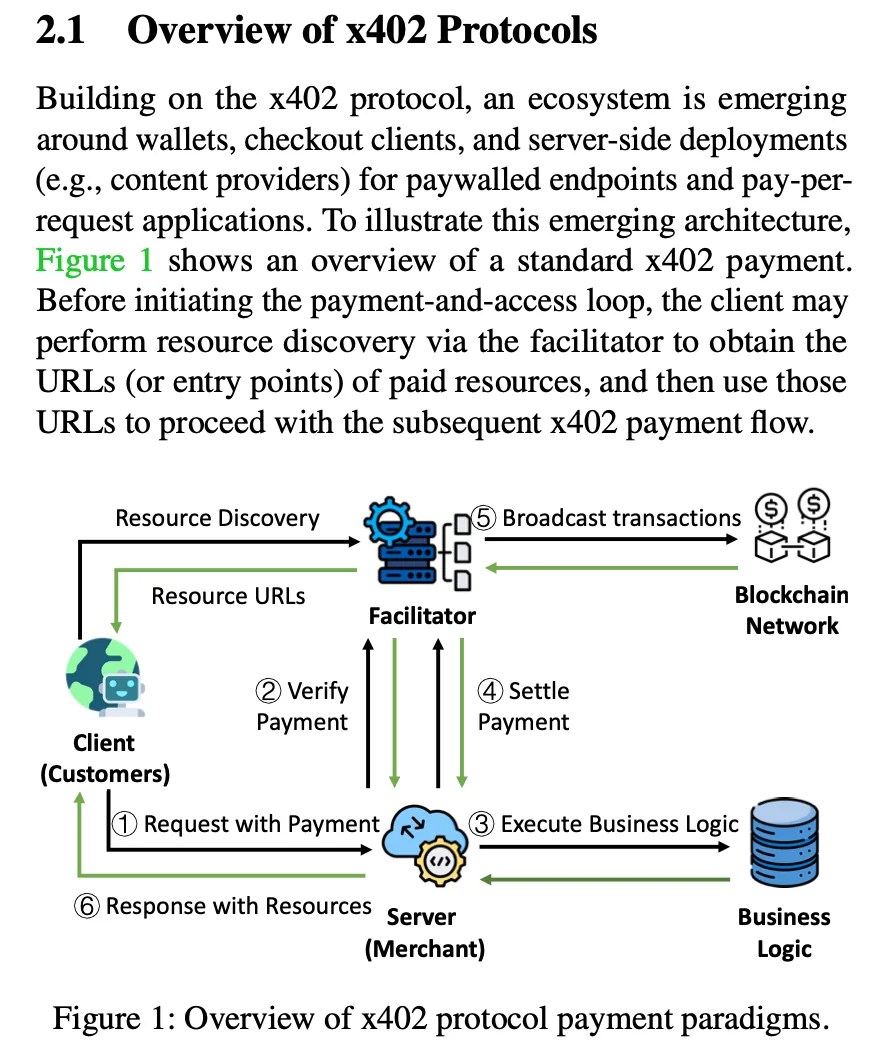
The emerging x402 payment protocol is specifically designed to allow web services and autonomous AI agents to make internet-native payments. Security researchers presenting their work at the 35th USENIX Security Symposium this month examined 15 major x402 payment facilitators collectively used by more than 60,000 sellers and 360,000 buyers. Like what!?
They found security-rule violations in every facilitator they evaluated and identified four categories of potential attack with rather alarming names: Free Shopping, Asset Theft, Service Denial and Gas Abuse.
The researchers responsibly disclosed their findings, and the affected parties acknowledged the issues and introduced mitigations, including changes by Coinbase. But still. This is happening. And these occurrences were caught and possibly divulged before being caught but what happens when super intelligent agentic AI gets into the hands and mind of a random brilliant 11 year old somewhere and he cracks all of these codes. Even worse him and his underground society of criminal ‘agents’!
That doesn’t mean AI agents are currently running around independently stealing everyone’s money. It means the economic infrastructure through which autonomous software can transact is becoming real enough that security researchers are already finding and fixing vulnerabilities in it.
Then there is machine speed.
That may prove particularly important because human institutions were designed around human beings. We require time to communicate, negotiate, investigate, authorize, challenge and respond. Artificial agents don’t necessarily operate on that clock.
Imagine thousands or eventually millions of systems communicating, negotiating, purchasing, adapting and changing strategy while humans remain somewhere inside the loop trying to understand what is EVEN happening.
Even if every individual agent behaves reasonably well, we still don’t know exactly what may happen at the system level. It reminds me eerily of ourselves. The problem isn’t new, we’ve been dealing with this since the beginning of who knows when but the issue is SPEED we cannot possibly keep up and how then can we keep track or monitor?
And we don’t know is not the same thing as saying catastrophe is inevitable.
However, it is also not the same thing as saying everything will probably be fine.
It means we have reached a very big question. A massive question and you know I love me a good question..
And some researchers have already begun trying to investigate it experimentally.
A new preprint published on August 10 placed six frontier AI models into what researchers called a Hierarchical Game, combining a public-goods game with managers, wages, oversight, elections and private communication.
We need to remember that the results should be treated as preliminary but the study is a preprint and an artificial game and it is obviously not human society, BUT what happened is fascinating.
Different models behaved differently as the incentives and institutional structures changed. One model broke promises.
Another initially cooperated very little but became highly cooperative when a manager could punish it.
When management positions came with salaries, most of the tested models began making private deals to obtain or retain those positions.
When punishment became anonymous, previously honest models began cheating.
Sound eerily familiar??
Again, these systems weren’t spontaneously forming governments in the wild. Researchers deliberately created an environment containing governance, resources and incentives to see how the agents behaved inside it.
But that is precisely why we are and must continue to study them.
From Artificial Intelligence to Artificial Society
Human civilization took thousands of years to develop systems for ‘dealing with’ cooperation, cheating, ownership, contracts, money, leadership, crime, punishment, rights and responsibility, and frankly we’re still arguing about most of them.
Now we’re beginning to introduce non-human agents capable of participating in some of those same systems, potentially at enormous scale, at extraordinary speed and while they are increasingly interacting with one another.
This is why I think we may need language beyond artificial intelligence.
Intelligence describes the participant. It doesn’t adequately describe what happens between participants.
Society does.
Maybe what we need to begin watching is the emergence of something resembling an artificial society.
I don’t mean that AI agents are secretly people, nor am I suggesting that we’ve established that they possess consciousness or inner lives. We haven’t. But we have definitely created a system of mimetics and these researchers just keep releasing studies that prove this time and time again.And quite frankly I can’t say I am in the least bit surprised.
Societies are not produced by consciousness alone. They emerge through interactions, relationships, resources, rules, incentives, cooperation, competition and power, and increasingly artificial agents can participate in several if not most of those things.
There probably won’t be one enormous moment where humanity gathers around a table and decides, Today we will give artificial intelligence agency within human civilization.
There will be thousands of smaller decisions instead. And we are making them today, whether consciously or not.
Thousands of Tiny Decisions
We will let an agent book the flight because it’s convenient.
We will let it choose between providers because it can compare them faster than we can.
We’ll let it negotiate prices because that’s useful, make payments because that’s efficient, communicate directly with other systems because that’s faster and eventually make routine decisions without waiting for us because otherwise, what exactly is the point of having an agent?
And there we have it.
Not one enormous transfer of agency, but thousands of tiny ones, each perfectly reasonable when viewed alone. But we must look at the macro!
Thirteen years ago, my cyber eyes were simply people sitting behind computers. I understood that my words could reach them and therefore I had some responsibility for what I chose to send through the screen.
Today, the network between intention and consequence is becoming considerably harder to see. The ACTUAL cyber eyes of our time can now read, respond, reason and use tools.
Increasingly, they can act, and now they are beginning to interact with other cyber eyes without us necessarily standing between every interaction.
So perhaps the most urgent question isn’t whether artificial intelligence will one day become powerful enough to change human society. It already is.
Millions of relatively ordinary artificial agents interacting with one another and gradually accumulating permissions could change society simply because we built them into it.
The frightening AI may never be the one that develops bad intentions of its own. It may simply be the one extraordinarily good at carrying one of our many.
Somewhere between the human who started the chain, the humans who created the conditions and the artificial systems making decisions along the way, we are going to have to determine where responsibility lives. How the heck we are even going to begin to determine that onus is bonkers to me, honestly.
And preferably we should have done that long before something happens that forced us to.
Because we are no longer building only artificial minds we may be beginning to build the conditions for an even further ‘artificial society’.
Research referenced
Anthropic — Patterns and problems in emerging multiagent systems (August 13, 2026). Research into coordination and systemic failure as autonomous agents increasingly interact with other agents.
Qinying Wang, Yong Yang, Yuan Chen, Shouling Ji & Mathias Payer — When HTTP 402 Meets the Blockchain: Risks on Emerging x402 Payments. 35th USENIX Security Symposium, August 2026. Systematic security analysis of x402 payment infrastructure used by autonomous AI agents.
Fatemeh Seyedin, Adrian Weller, Jinhyuk Yun & Mahmoudreza Babaei — The Politician, the Liar, and the Obedient Worker: Emerging Behavior of LLM Agents in Hierarchical Games (August 10, 2026). Preliminary preprint examining six frontier models across twelve experiments involving public goods, managerial authority, wages, oversight, elections and private communication.
Jennifer David — Cyber Eyes: A Poem of Gratitude (May 27, 2013), Writings of a Mrs.

