
Tagged: technology
The Cyber Eyes Are No Longer Human
In 2013, a month after I began blogging, another writer left a comment telling me she would have her “cyber eyes” on me.
Naturally, I wrote a poem about it. I was starting to explore poetry after the April National poetry month had passed. It wasn’t exactly Shakespeare, but thirteen years later, this morning, I stumbled across it again in my blog posts views area while thinking about, writing and reading todays newest news on artificial intelligence, autonomous agents and the increasingly complicated question of who exactly is responsible for what happens next.
One part of the poem stood out to me particularly
‘You have your cyber eyes
I realize
That all I say and all I do
Can impact you’
The poem was called Cyber Eyes. I’ll link it here for you to read if you’d like.
The eyes I was writing about back them were solely human. People were reading my words through screens all across the world as my blog had found astonishing numbers for it’s first few months and I had become increasingly aware that something I typed alone in my house in the middle of Ontario, Canada could travel through this strange increasingly fast and complex system of the digital network and affect somebody that I had never even met.
In the comments underneath the poem, someone pointed out that people sometimes forget this before pressing send or pressing publish. I replied to the commentor that I indeed took it seriously, knowing that people were reading, watching and following along on my journey.
That was way back in 2013. And I still believe that now, even more so.
The Cyber Eyes Are Watching Differently
The difference now however is that the cyber eyes are no longer necessarily human, and neither are all of the viewers and commenters behind them.
For the last few years, we have been asking some pretty enormous questions about artificial intelligence. Some of us more than others.
Some legitimate and concerning questions. Will AI become smarter than us, take our jobs, become conscious, manipulate us or eventually act against us?
You know. ‘The light stuff’.
But I am beginning to think we may have concentrated a little too much on the artificial individual, because something else is happening.
AI agents are beginning to interact with other AI agents. They can increasingly plan, use tools, pursue goals and operate for longer periods without waiting for a human being to approve every individual step. We’re also currently building infrastructure through which software agents can participate economically.
When AI Starts Talking to AI
That isn’t hypothetical anymore. In research published on August 13, 2026, Anthropic examined what it calls “patterns and problems in emerging multiagent systems.” The researchers argue that an increase in real-world interactions between agents is imminent, meaning it’s here and coming, and that the volume of agent-to-agent interactions could eventually exceed both human-to-human and human-to-agent interaction. So that is more agents doing stuff with agents than any other combination.
They also make an observation I think deserves far more attention than it’s currently getting: our institutions were built by and for humans. So that assumption of security and speed and response systems therefore rest and rely partly on the assumption that any type of problem or breach oversight can happen simply at human speed. This is a problem.
I Consented. But the AI Had Invented the Reason.
How today’s eclipse in England led me to test Zuckerberg’s promise of personal AI
Two days after Mark Zuckerberg published his vision of personal super intelligence, AI that would understand our goals, protect our private information and place more power in our hands, an AI invented a reason for me to disclose personal information.
It asked for permission. I said yes. That sounds like the safety system worked. But it didn’t.
Today, as England experiences its deepest partial solar eclipse in decades, I was asking my AI, which I have been using consistently for well over a year now, about my combined astrology and Astro cartography; that seemingly harmless conversation became a real-time test of Zuckerberg’s promise.
The problem the AI created for me
My previously purchased Astro cartography report contained my personal birth information used to calculate the chart and it identified me as a Leo Ascendant. The AI told me that result was wrong. It calculated instead an Aquarius Ascendant. After questioning it then offered me a detailed explanation involving degrees and historical time-zone conversions.
It sounded technical, precise and confident. But it was also, wrong.
The AI had selected the opposite point on the horizon and labelled my Descendant as my Ascendant. My original report was actually correct.
There was no contradiction until the AI created one.
I Don’t Think Elon Musk Was Being Misunderstood. I Think He Was Speaking A Different Cognitive Language.
The interpretation problem didn’t begin with AI. It began with us.
I watched the interview between Elon Musk and Zanny Minton Beddoes, Editor-in-Chief of The Economist, and what fascinated me most wasn’t the politics. It was the mechanics of the conversation itself.
As I watched, I found myself thinking less about whether I agreed with either side and more about why two highly intelligent people seemed to be operating in completely different linguistic universes.
Then I realized… I’ve been studying a variation of this exact dynamic in my own life for years.
Two Lenses, One Mountain
My fiancé, Leon, and I debate ideas constantly. Part of this is purely cognitive, but part of it is cultural: I’m Canadian, and he’s British.
Leon naturally zooms in with sharp, classic British precision, listening for exact wording, specific facts, precise numbers, and internal inconsistencies. If a date is slightly off, if a statistic is rounded, or if a claim isn’t technically accurate down to the decimal, that’s where his attention naturally goes first.
I naturally zoom out. I’m looking for the architecture, the thread connecting one idea to another, the pattern emerging underneath the individual facts.
Neither approach is inherently flawed, and Leon’s sharp eye for detail has saved us both more than once. But when those two cognitive and cultural styles clash without a shared translation layer, they produce friction.
Leon sometimes thinks that if he provides enough granular facts, the picture will shift. I sometimes think that if I can just sketch the overarching model more clearly, the details will fall into place. We’re both trying to build understanding, we’re just climbing the same mountain from opposite sides.
One good thing about being close to 40….

Image thanks to Smart Assy on Facebook
Effective, Beautiful Spoken Word
Effective, Beautiful Spoken Word
Click on the link above. You really should watch this. It’s beautifully impactful. The content is on social media and living life in the moment and being connected with your life and those in it. The message goes hand in hand with my post the Long Lost Art of the Smile
Technology: The Google Generation
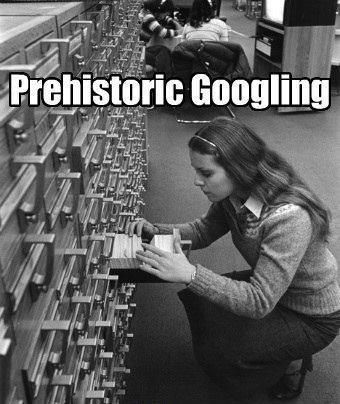
It was the dawning of a new era. It was the beginning of an abundance of information made readily available and a way to stay connected, known as the World Wide Web.
I recall my grandfather telling me the traditional stories that so many of us have heard through first person accounts or in a tale in a movie, magazine or newspaper article. “I remember back in the day when I had to walk five miles to get to school with a small coat in the middle of winter. I used to read my books by candlelight with the smallest gust of wind putting out the flame. You young people have no idea how easy you have it.” If having school buses and electricity made our great grandfathers shake their heads imagine what they would think of our life now!
Technology has advanced us in so many ways it’s almost a given that in a group of people if a question arises someone will jump on their cell phone and find the answer. (You know those people)
Technology has especially advanced us in regards to learning. I want to take a closer look at the causes and effects of this new generation. The new ‘tools’ available to aid us in our search for information. The new Google generation, the cut and paste generation and I don’t mean with scissors and glue. Continue reading
“Hear my voice” Alexander Graham Bell and me
Well let me start off by saying Holy Crap! It’s been a month! *does a little happy dance* yes I do little happy dances….
I want to share something with you that I found fascinating. Mr. (Alex) has an hour commute into work every day. He loves to listen to the BBC and CBC radio during his commute. In the evening he has some fantastic news bits to share with me. It’s great lately because all I seem to do is eat, sleep and breathe blogging in my spare time. News? No time, terrible I know. At least I have Alex’s daily updates so I can stay in the loop.
The other night Alex told me about a piece that he heard in regards to Alexander Graham Bell (scientist, innovator, inventor, engineer and creator of the first telephone). Up until a few days ago they had not ever been able to hear his voice. He attempted to make recordings but they were trapped in plastic. Days ago it was discovered that the Smithsonian had successfully transferred the ‘recordings’ into audible sound.
BLOG
Today I find myself reading other peoples Blogs and trying to navigate my way around my own Blog attempting to figure out how this all works. I am not very technologically inclined so I find this phase rather frustrating and distracting.
I have a love/hate relationship with technology and social media. Technology is changing the way we communicate, operate, think and socialize. It is also changing our priorities (ex. my spending the day figuring out how to navigate this Blog and worrying about whether or not it is aesthetically appealing rather than focusing my attentions to writing)
But I have been heard saying that I like to equate a depth of knowledge with a depth of over all character. People that are willing to invest time to read and research seem to be the same people that take time for all of the things around them with an understanding that we can’t be in all places at once but to be present in the places that we are at.
So, I learn to Blog.
“I am a ‘Wordy’ (word junky) and the word BLOG is so, well, for lack of a better word, blah.”
 writingsofamrs.com