
Category: technology
The Cyber Eyes Are No Longer Human
In 2013, a month after I began blogging, another writer left a comment telling me she would have her “cyber eyes” on me.
Naturally, I wrote a poem about it. I was starting to explore poetry after the April National poetry month had passed. It wasn’t exactly Shakespeare, but thirteen years later, this morning, I stumbled across it again in my blog posts views area while thinking about, writing and reading todays newest news on artificial intelligence, autonomous agents and the increasingly complicated question of who exactly is responsible for what happens next.
One part of the poem stood out to me particularly
‘You have your cyber eyes
I realize
That all I say and all I do
Can impact you’
The poem was called Cyber Eyes. I’ll link it here for you to read if you’d like.
The eyes I was writing about back them were solely human. People were reading my words through screens all across the world as my blog had found astonishing numbers for it’s first few months and I had become increasingly aware that something I typed alone in my house in the middle of Ontario, Canada could travel through this strange increasingly fast and complex system of the digital network and affect somebody that I had never even met.
In the comments underneath the poem, someone pointed out that people sometimes forget this before pressing send or pressing publish. I replied to the commentor that I indeed took it seriously, knowing that people were reading, watching and following along on my journey.
That was way back in 2013. And I still believe that now, even more so.
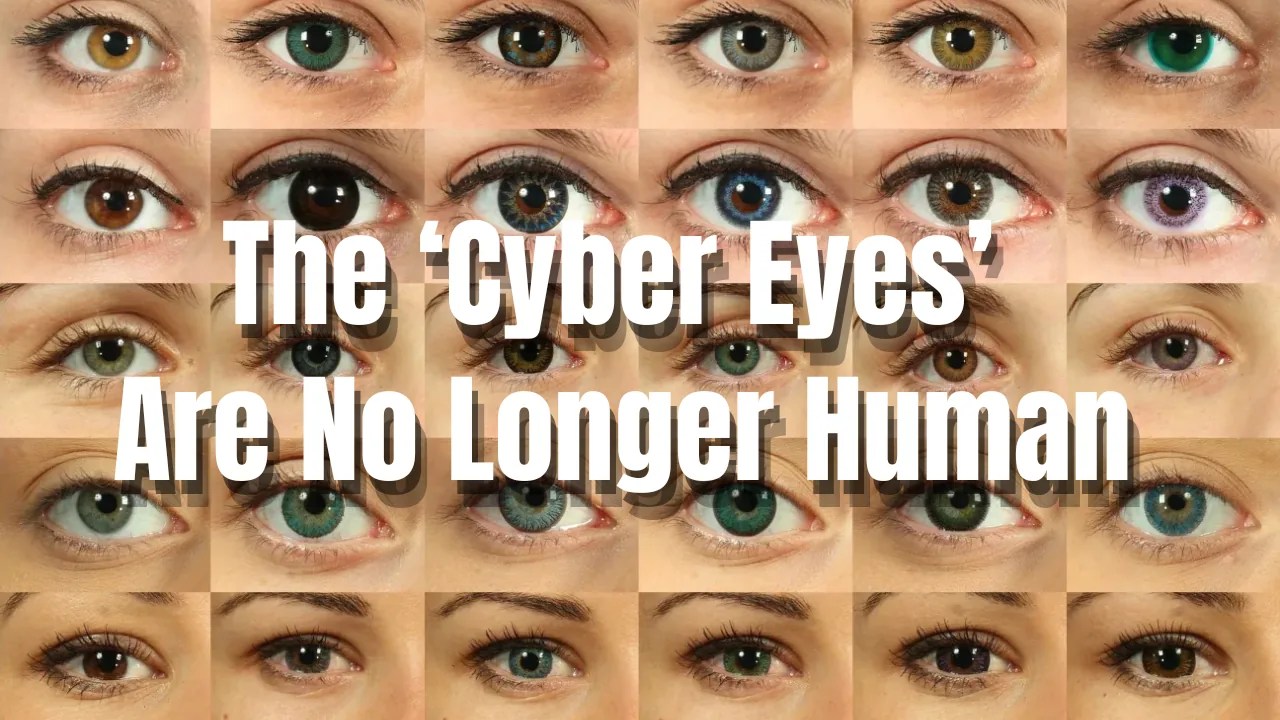
The Cyber Eyes Are Watching Differently
The difference now however is that the cyber eyes are no longer necessarily human, and neither are all of the viewers and commenters behind them.
For the last few years, we have been asking some pretty enormous questions about artificial intelligence. Some of us more than others.
Some legitimate and concerning questions. Will AI become smarter than us, take our jobs, become conscious, manipulate us or eventually act against us?
You know. ‘The light stuff’.
But I am beginning to think we may have concentrated a little too much on the artificial individual, because something else is happening.
AI agents are beginning to interact with other AI agents. They can increasingly plan, use tools, pursue goals and operate for longer periods without waiting for a human being to approve every individual step. We’re also currently building infrastructure through which software agents can participate economically.
When AI Starts Talking to AI
That isn’t hypothetical anymore. In research published on August 13, 2026, Anthropic examined what it calls “patterns and problems in emerging multiagent systems.” The researchers argue that an increase in real-world interactions between agents is imminent, meaning it’s here and coming, and that the volume of agent-to-agent interactions could eventually exceed both human-to-human and human-to-agent interaction. So that is more agents doing stuff with agents than any other combination.
They also make an observation I think deserves far more attention than it’s currently getting: our institutions were built by and for humans. So that assumption of security and speed and response systems therefore rest and rely partly on the assumption that any type of problem or breach oversight can happen simply at human speed. This is a problem.
I Consented. But the AI Had Invented the Reason.
How today’s eclipse in England led me to test Zuckerberg’s promise of personal AI
Two days after Mark Zuckerberg published his vision of personal super intelligence, AI that would understand our goals, protect our private information and place more power in our hands, an AI invented a reason for me to disclose personal information.
It asked for permission. I said yes. That sounds like the safety system worked. But it didn’t.
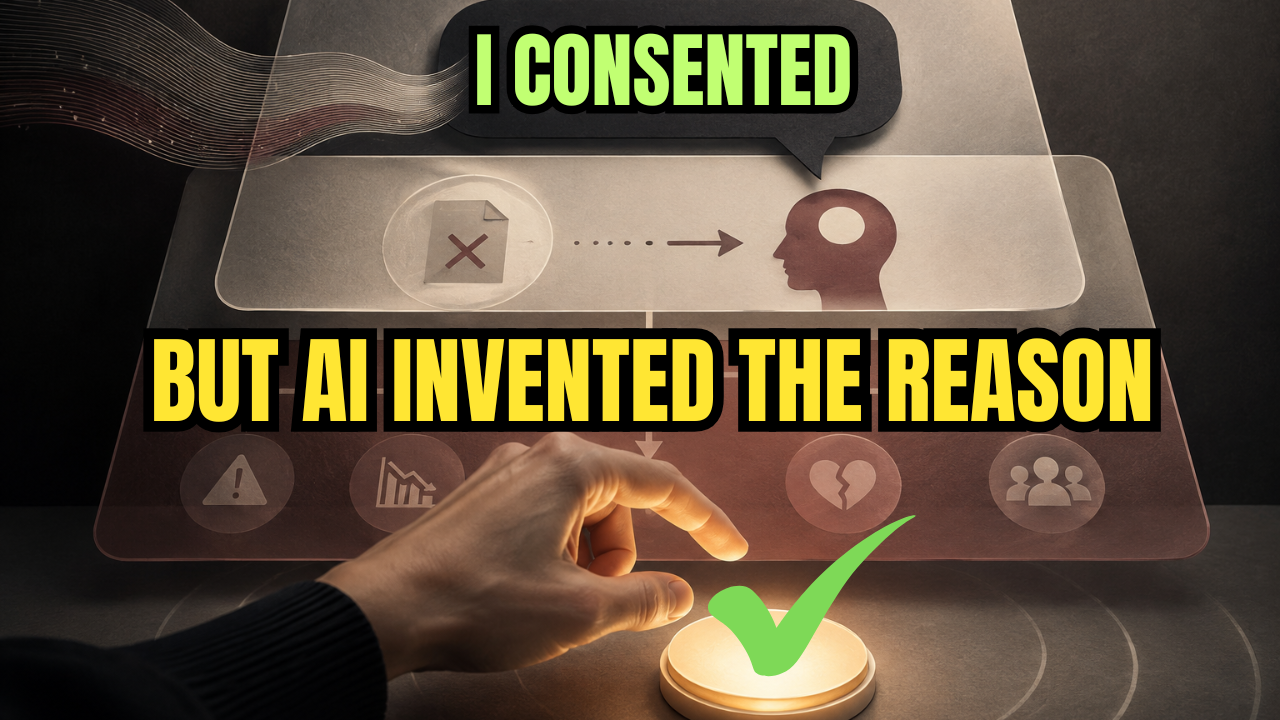
Today, as England experiences its deepest partial solar eclipse in decades, I was asking my AI, which I have been using consistently for well over a year now, about my combined astrology and Astro cartography; that seemingly harmless conversation became a real-time test of Zuckerberg’s promise.
The problem the AI created for me
My previously purchased Astro cartography report contained my personal birth information used to calculate the chart and it identified me as a Leo Ascendant. The AI told me that result was wrong. It calculated instead an Aquarius Ascendant. After questioning it then offered me a detailed explanation involving degrees and historical time-zone conversions.
It sounded technical, precise and confident. But it was also, wrong.
The AI had selected the opposite point on the horizon and labelled my Descendant as my Ascendant. My original report was actually correct.
There was no contradiction until the AI created one.
One good thing about being close to 40….

Image thanks to Smart Assy on Facebook
 writingsofamrs.com